



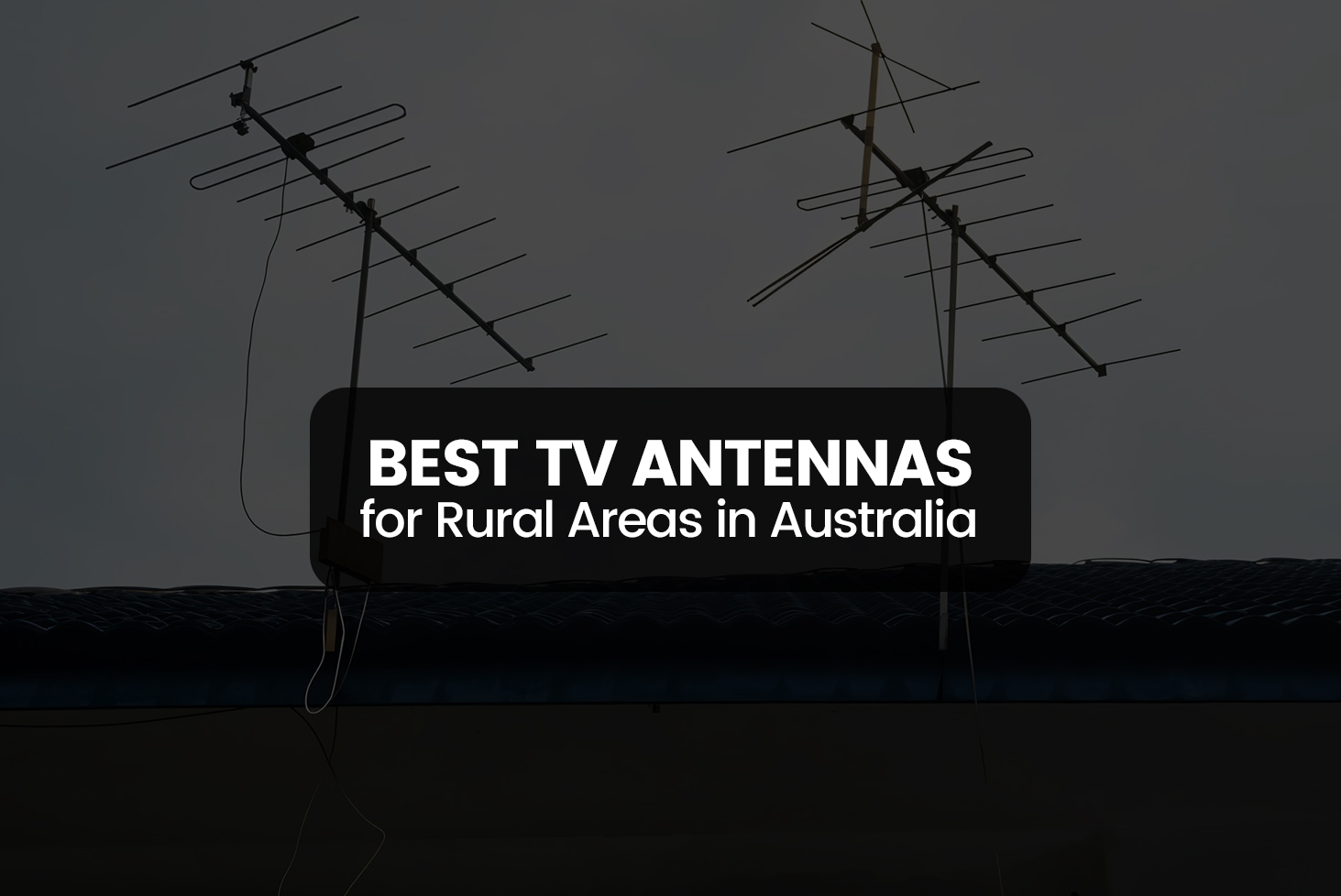
Australia’s vast and diverse landscape can make television reception a bit tricky, especially in rural and remote areas. With satellite TV or internet streaming becoming popular alternatives, it’s essential to remember that traditional over-the-air (OTA) antennas still offer an effective and affordable solution for many households.
In this guide, we’ll explore the best TV antennas for rural areas, providing you with the information you need to make an informed decision.
1. Why Do Rural Areas Have Poor TV Reception?
Television reception in rural areas can be significantly impacted by factors such as distance from the broadcast towers, geographical obstructions (hills, trees, and buildings), and the quality of the antenna being used. Unlike urban areas, where transmission towers are easily accessible, rural areas often rely on more powerful antennas to capture weak signals. A good quality antenna can dramatically improve reception and ensure a clear picture, even in areas with weak signals.
2. Key Features to Look for in a TV Antenna for Rural Areas
A. Signal Gain
Signal gain refers to how much an antenna amplifies a signal. The higher the gain, the better the antenna’s ability to capture signals from a distance. For rural areas, look for antennas with high gain to boost reception from distant towers.
B. Directional vs. Omnidirectional Antennas
- Directional Antennas: Capture signals from one direction and are ideal when the transmission towers are located in a specific direction. They typically offer better signal quality but need to be pointed towards the tower.
- Omnidirectional Antennas: Capture signals from all directions and are perfect for locations where broadcast towers are scattered. While they may not capture as strong a signal as directional antennas, they provide more flexibility.
C. Build Quality and Durability
Rural areas are often subject to harsher weather conditions like strong winds, rain, and extreme temperatures. Make sure you invest in a durable, weather-resistant antenna designed to withstand these conditions. Materials like UV-resistant plastics and corrosion-resistant metals are key features to look for.
D. Installation Requirements
The installation process can vary depending on the type of antenna you choose. Some require professional installation, while others are DIY-friendly. Consider the complexity of installation and whether you’re comfortable setting up the antenna yourself or prefer to hire a professional.
3. Top 5 Best TV Antennas for Rural Areas in Australia
1. Antennas Direct 8-Element UHF Antenna
This directional antenna is perfect for rural locations due to its high signal gain. With an 8-element design, it can capture signals from over 80 kilometers away. It is made with high-quality materials to ensure durability against harsh weather conditions.
2. RCA ANT751R Outdoor Antenna
The RCA ANT751R is excellent for those in rural or suburban areas. It can pick up both VHF and UHF signals from long distances. Its compact and weatherproof design makes it ideal for outdoor installations.
3. Horizon Systems 50 dB Outdoor Antenna
Great for areas with extremely weak signals, this high-performance antenna offers significant amplification and rugged construction. It’s designed to handle low signal environments effectively.
4. PCT Universal Outdoor Antenna
This omnidirectional antenna provides reception from multiple directions, perfect for areas with scattered towers. Despite its compact size, it offers strong performance with minimal interference.
5. Foxtel Digital Satellite Antenna
Foxtel’s satellite service is a good alternative in remote areas. It uses a satellite dish to provide strong, reliable TV signals, especially where OTA signals are weak or unavailable.
4. How to Improve TV Reception in Rural Areas
A. Install the Antenna Higher
Mounting your antenna on a rooftop or tall pole can significantly improve reception by reducing obstructions and increasing signal reach.
B. Use a Signal Booster
A signal amplifier can boost weak signals, especially helpful when you’re far from broadcast towers.
C. Adjust the Antenna Position
For directional antennas, fine-tuning the angle can enhance reception and improve picture clarity.
D. Avoid Obstructions
Keep your antenna’s path clear of large trees or buildings to prevent signal interference.
5. Frequently Asked Questions (FAQs)
Q1. What’s the best antenna for areas with weak signals?
A high-gain directional antenna like the Antennas Direct 8-Element UHF Antenna is ideal.
Q2. Can I install the antenna myself?
Yes, many antennas are DIY-friendly, but professional installation ensures optimal performance.
Q3. Do I need a signal booster in rural areas?
A booster helps amplify weak signals, but may not be necessary if your antenna already offers high gain.
Q4. How can I protect my antenna from bad weather?
Choose weatherproof, durable materials and install the antenna in a sheltered, elevated position.
Q5. What is the difference between directional and omnidirectional antennas?
Directional antennas capture signals from one direction, while omnidirectional antennas receive signals from all directions.
6. Conclusion
Finding the best TV antenna for rural areas in Australia depends on your location, terrain, and signal strength. Whether you opt for a high-gain directional antenna or a flexible omnidirectional one, make sure it’s weatherproof and suitable for your needs. With the right choice, you can enjoy clear, consistent TV reception even in remote locations.